
-
NT 116 is a robust, strong fermenting strain for the production of highly aromatic red and white wines. This strain is responsible for red and black fruit in full-bodied red wines, as well as thiol, ester and citrus aromas in aromatic, crisp white wines.
-
NT 116 is a robust, strong fermenting strain for the production of highly aromatic red and white wines. This strain is responsible for red and black fruit in full-bodied red wines, as well as thiol, ester and citrus aromas in aromatic, crisp white wines.
-
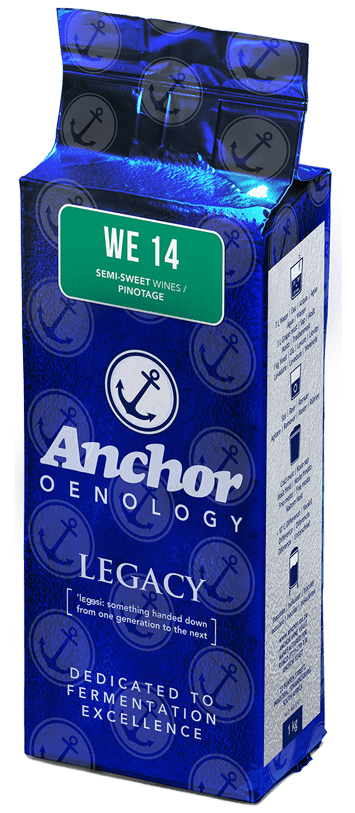
WE 14 is very suitable for the production of all natural sweet wines including noble late harvest wines. It is resistant to the toxins secreted by Botrytis cinerea and can easily start fermentation at a high sugar concentration. It is however unlikely to ferment high sugar musts to dryness. WE 14 is cold sensitive and fermentation can easily be stopped by lowering the temperature to 10°C.
-
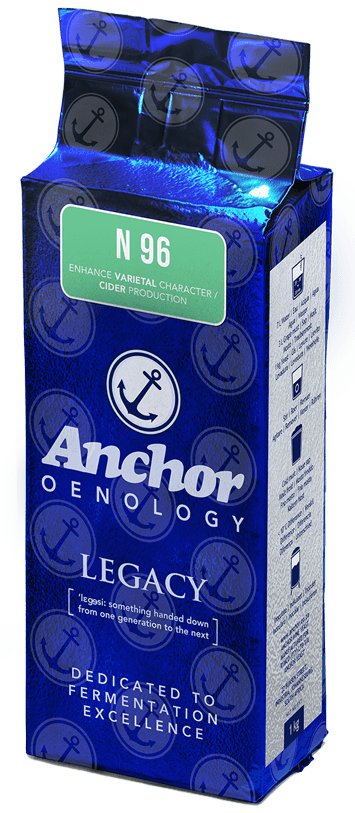
N 96 is a neutral wine yeast, which allows varietal character to dominate wine aroma. It is also well suited for the production of sparkling wines and ice wine. Ideal for cider production, where a more varietal aroma profile is desired.
-
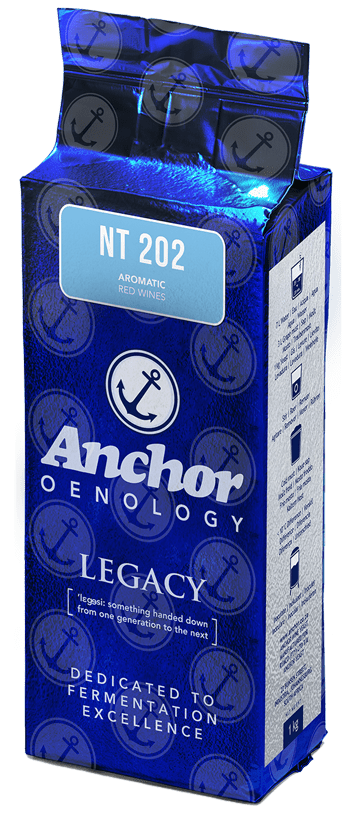
NT 202 enhances red berry aromas in Cabernet Sauvignon and Merlot and blackberry, black currant, tobacco and prune aromas in Pinotage. It is recommended for the production of red wines with or without wood maturation. NT 202 has a high alcohol tolerance, good fructose utilisation and a stimulating effect on malolactic fermentation when compared to other red wine strains. It is therefore especially suitable for the vinification of high sugar musts where the resulting high alcohol at the end of fermentation can potentially cause sluggish or stuck alcoholic fermentations and/or problematic MLF’s.
-
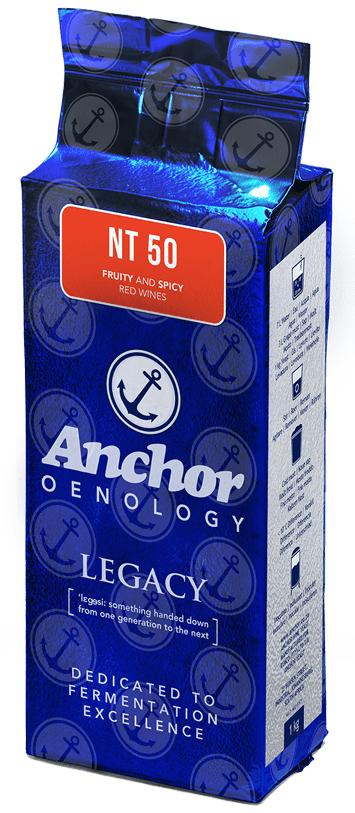
NT 50 enhances red berries (strawberry, raspberry and cherry), black berries (blackberry and blackcurrant) and spicy aromas in red wines. It is suitable for wine with or without wood maturation. It is most suited for vinifying Shiraz (Syrah), Cabernet Franc, Zinfandel, Grenache, Pinot noir, Pinotage and Gamay noir.
-
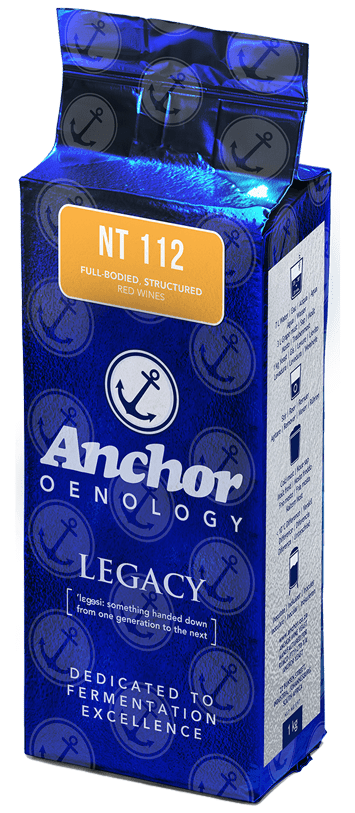
NT 112 is recommended for the production of red wines with a firm tannic structure. It enhances blackberry and blackcurrant aromas in Cabernet Sauvignon and red berry and minty aromas in Shiraz and Pinotage. It is also appropriate for vinifying Cabernet Franc and Zinfandel. NT 112 can produce SO2 under stress conditions, i.e. very high alcohols (>14%) and low fermentation temperatures (<20°C).
-
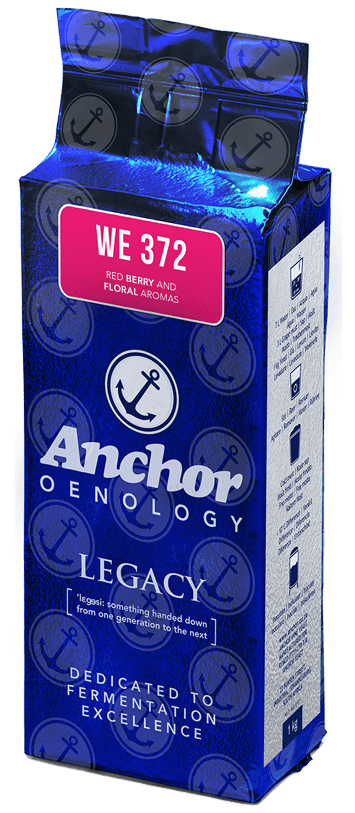
WE 372 enhances red berry and floral aromas in red wines. It is recommended for the vinification of most red grape varieties; Cabernet Sauvignon, Cabernet Franc, Merlot, Shiraz/Syrah, Pinotage and Pinot noir. WE 372 is also recommended for the production of semi-sweet white wines, as the fermentation is easily slowed down by lowering the temperature to 10°C.
-
INOFINE V is a formula made up exclusively of pea proteins, particularly used for applications involving must clarification and wine fining, in both cases combined with mineral-derived additives (bentonite or silica gel) or tannins. This formula is used in the same way as gelatin. Coupled with a fining agent, it provides efficient suspended matter sedimentation in wines. In laboratory trials and on wines, lees is shown to settle better in relation to fining procedures that use animal-origin fining agents.
-
Qi’UP XC is a biopolymer-based formula of chitin derivatives that have a very high surface charge at the pH level found in wine, and it is this that forms the floccules. It enhances the speed and performance with which the particles separate from the suspension, independently of the nature of the juice and the type of floatation technique used. Qi’UP XC provides a genuine alternative to the use of animal products such as gelatine. Qi’UP XC can be used in conjonction with Bent'Up (bentonite suitable for floatation) to help for a better clarification.
-
Qi FINE is a blend of chitosan, a chitin derivative with a high charge density and peerless flocculation and sedimentation rapidity, and a pea protein, specifically selected for its strong reactivity to phenolic compounds. Used for fining wines and musts, during settling or alcoholic fermentation processes, Qi FINE is highly efficient when it comes to absorbing polyphenolic compounds in the oxidation chain and correcting defects linked to bitterness and astringency in wines.
-
Qi No[OX] is a 'technological auxiliary' consisting of polysaccharides of vegetable origin (by-products of chitin) and bentonite that assists the rapid sedimentation of the complex. Qi No[OX] has been developed especially to be used with both must and wine. It is intended for musts of white wine that have a tendency to oxidation (e.g., spoiled grape harvests) or for wines, even when oxidated. Qi No[OX] helps remove the brown colouration that forms a visual wine fault. It removes caramel and Madeira notes, bringing freshness to the wine, whilst reducing the vegetal notes and bitterness often associated with oxidation problems.



SUPPORTING YOU FROM GRAPE TO GLASS
© Copyright 2023 Anchor Oenology. All rights reserved.