
-
Nourish provides a complex source of organic and inorganic nitrogen during fermentation, as well as essential vitamins, minerals, trace elements, amino acids and stress resistance factors like sterols and unsaturated fatty acids. Nourish therefore secures yeast multiplication and viability during fermentation, ensuring optimum yeast performance.
-
Conquer provides a complex source of organic and inorganic nitrogen during fermentation, as well as essential vitamins, minerals, trace elements, amino acids and stress resistance factors like sterols and unsaturated fatty acids. The stress resistance factors ensure membrane integrity, especially towards the end of fermentation, as well as protecting the yeast against medium chain fatty acid inhibitors that could negatively influence the fermentation.
-
ACTIVIT is composed of ammonium salts, yeast inactivated and thiamin. It is used where alcoholic fermentation has slowed and will maintain fermentation where must nitrogen is deficient. ACTIVIT provides both ammoniacal nitrogen and amino acid nitrogen which is essential for the multiplication and viability of yeast during fermentation. It has a two pronged beneficial effect:
- Absorbing the short chain fatty acids which can inhibit fermentation.
- Providing sterols and long chain fatty acids which are essential precursors in maintaining viability of the yeast.
-
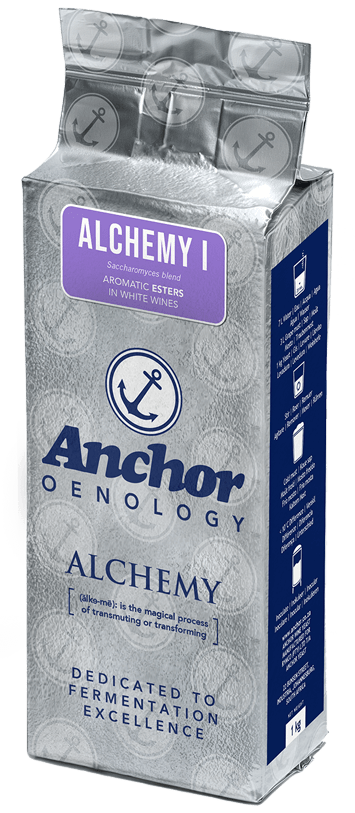
Alchemy I mainly enhances fruity and floral esters and to a lesser extent, volatile thiols (passion fruit, grapefruit, gooseberry and guava aromas) in white wines. This effect is the result of the synergistic action of the specific yeast strains used in the blend. The ratio of the yeast strains in the blend has been scientifically formulated to provide this optimum aromatic profile. It is recommended for vinifying white grape varieties such as Chardonnay, Chenin blanc, Verdelho, Riesling, Pinot gris and tropical style Sauvignon blanc.
-
Alchemy II enhances volatile thiols (box wood, passion fruit, grapefruit, gooseberry and guava aromas) in white wines. This effect is the result of the synergistic action of the specific yeast strains that release and convert the volatile thiols. The ratio of the yeast strains in the blend has been scientifically formulated to provide this optimum aromatic profile. It is recommended for vinifying white grape varieties such as Sauvignon blanc, Colombard, Chenin blanc and Verdelho.
-
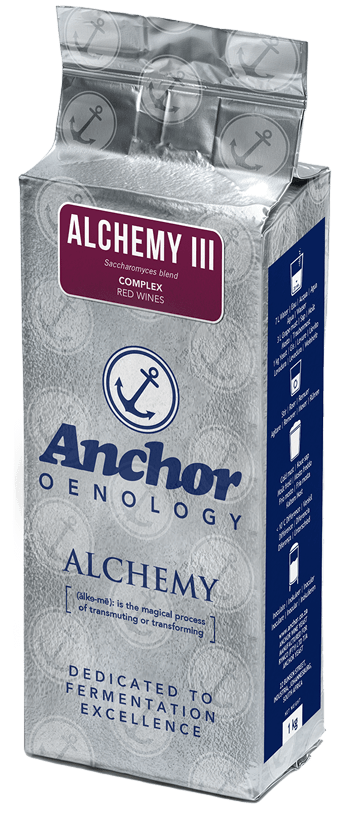
Alchemy III is for the production of complex red wines. This blend is a very high producer of 2-phenyl- ethanol (rose), 2-phenylethyl acetate (floral and fruity), ß-ionone (raspberry) and acetate esters (fruity and candy). Common to both Anchor Alchemy red blends is their very high contribution to fruit aromas due to higher total esters and ethyl hexanoate production. This is further enhanced by ß-damascenone (violets) and a decrease in methoxy-pyrazines (which can mask fruit characters). Alchemy III produces complex wines, with good structure and body and is suitable for all red varietals.
-
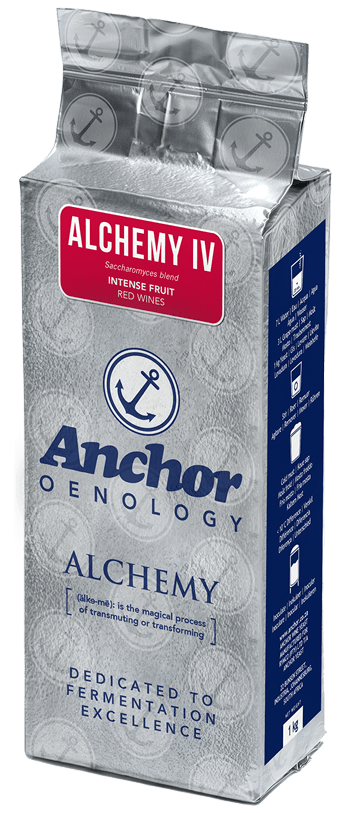
Alchemy IV is for the production of intense red fruit characters (cherry, raspberry, red currant and pomegranate) in wines. This blend is a very high producer of ethyl esters, especially of ethyl hexanoate (fruity), which contributes to the longevity of fruit aromas. This makes it very suitable in ageing wines that keep their intense red fruit characters. This blend also has significant production of total esters and terpenes (fruity and violet). Common to both Anchor Alchemy red blends is their very high fruit contribution due to higher total esters and ethyl hexanoate production. This is further enhanced by ß-damascenone (violets) and a decrease in methoxy-pyrazines (which can mask fruit characters). Alchemy IV produces wines with significant aroma intensity that are rounded and smooth and is suitable for all red varietals.
-
Alchemy IV is for the production of intense red fruit characters (cherry, raspberry, red currant and pomegranate) in wines. This blend is a very high producer of ethyl esters, especially of ethyl hexanoate (fruity), which contributes to the longevity of fruit aromas. This makes it very suitable in ageing wines that keep their intense red fruit characters. This blend also has significant production of total esters and terpenes (fruity and violet). Common to both Anchor Alchemy red blends is their very high fruit contribution due to higher total esters and ethyl hexanoate production. This is further enhanced by ß-damascenone (violets) and a decrease in methoxy-pyrazines (which can mask fruit characters). Alchemy IV produces wines with significant aroma intensity that are rounded and smooth and is suitable for all red varietals.
-
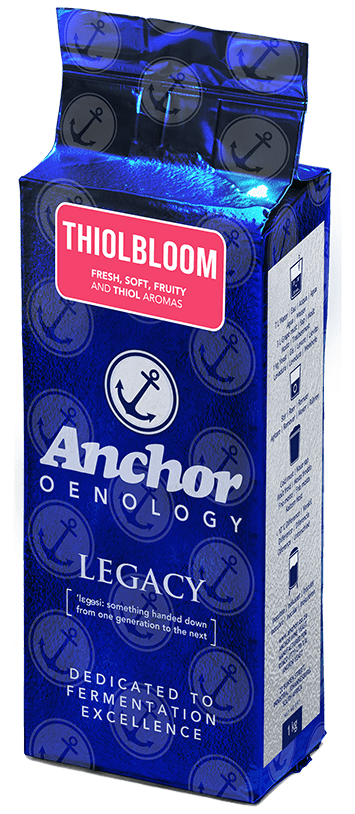
Legacy ThiolBloom has been selected for its ability to enhance the major thiol compounds in white wines, like Sauvignon blanc. This leads to increased aromas of grapefruit, passionfruit, gooseberry, guava and tropical fruit. ThiolBloom also enhances fresh fruit, softness and volume, creating easy-drinking, ready-for-market wines with fresh mouthfeel and acidity.
-
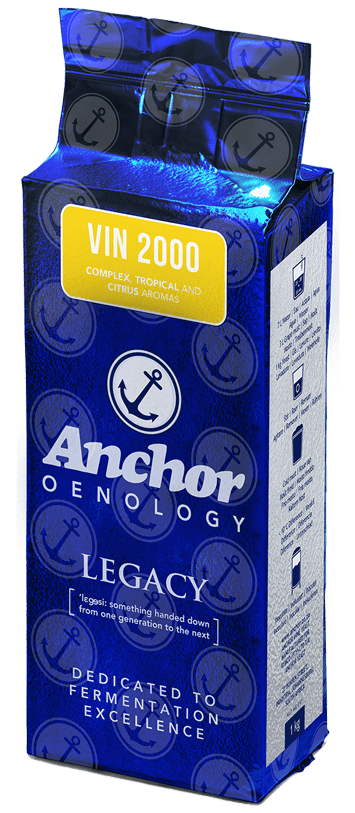
VIN 2000 is recommended for the production of barrel fermented Chardonnay (good fructose utilisation, tropical and citrus aromas), Viognier (floral and citrus aromas) and “rich and ripe” style Chenin blanc (fresh pineapple, paw-paw and citrus aromas).
-
VIN 13 enhances volatile thiol aromas (passion fruit, grapefruit, gooseberry and guava) and produces esters (tropical fruit salad, floral). It is recommended for vinifying Chardonnay, Chenin blanc, Riesling, Semillon, Gewürztraminer, Viognier, Pinot gris, Marsanne, Rousanne and all Muscat grape varieties. VIN 13 is also ideal for the production of aromatic rosés from all red grape varieties.
-
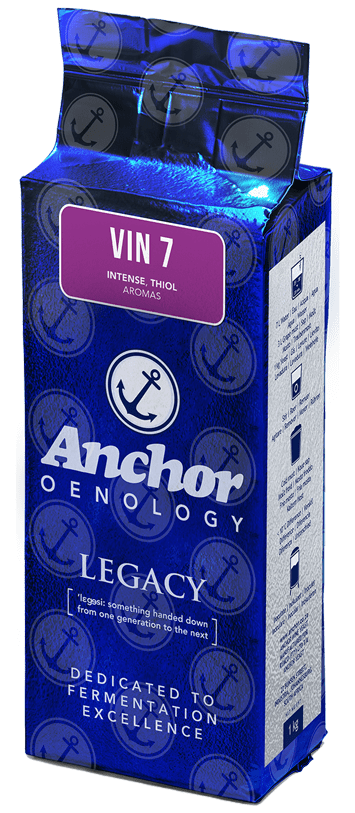
VIN 7 is ideal for the production of aromatic white wines at low temperatures. VIN 7 releases passion fruit, grapefruit, gooseberry and guava aromas and flavours from their non-aromatic precursors in the must. It is therefore especially recommended for vinification of the following grape varieties: Sauvignon blanc, Chenin blanc and Colombard.






SUPPORTING YOU FROM GRAPE TO GLASS
© Copyright 2023 Anchor Oenology. All rights reserved.